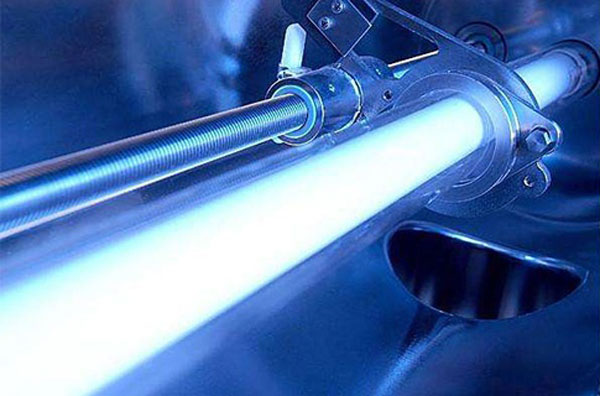
The way a UV sterilizer works is through a special fluorescent bulb which emits light at a wavelength of 253.7 nanometers. As aquarium water is filtered through the UV chamber, it is exposed to the light and irradiated.
Unlike chemical approaches to water disinfection, UV provides rapid, effective inactivation of microorganisms through a physical process. When bacteria, viruses, and protozoa are exposed to the germicidal wavelengths of UV light, they are rendered incapable of reproducing and infecting.
UV sterilization is a disinfection method that uses short-wavelength ultraviolet (UV-C) light to kill or inactivate microorganisms by destroying nucleic acids and disrupting their DNA, leaving them unable to perform vital cellular functions.


 +86-25-58849045
 jiuwu@jiuwu.com
 No. 9 Park Road, Pukou District, Nanjing City (Sanqiao Factory)



 Call us on:
  Email Us:
  No. 9 Park Road, Pukou District, Nanjing City (Sanqiao Factory)
 English
 한국어
한국어 français
 русский
 Español