
.png)
Meta description: Discover how JIUWU Hi-Tech evaluates ceramic membrane filtration and integrated treatment processes for new waterworks, existing plant upgrades and urban–rural drinking water supply.
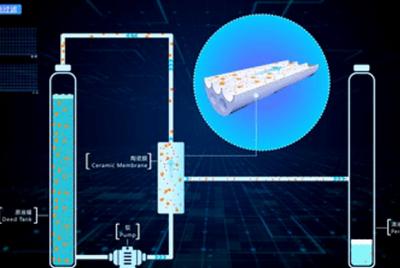
Ceramic membranes physically retain particles according to their filtration characteristics and can serve as a filtration stage in a drinking water treatment process. Performance depends on membrane pore size, source water conditions, pretreatment and system operation.
High-quality drinking water supply requires filtration to work alongside any necessary advanced treatment, disinfection, storage and distribution management. For water utilities, the value of ceramic membranes should therefore be assessed within the complete water supply system.
JIUWU Hi-Tech has applied ceramic membrane technology in municipal water treatment and has published application directions covering new urban waterworks, existing plant upgrades and rural drinking water projects. Source: JIUWU Hi-Tech—Technologies for High-Quality Drinking Water
A waterworks upgrade should begin by identifying the factors limiting treatment performance and operating efficiency.
Some plants need to manage seasonal changes in source water quality. Others face restricted space and aging facilities. Distributed water supply projects may need greater automation to reduce routine operating demands.
These challenges lead to different design priorities:
Variable source water: Assess how pretreatment and membrane operation respond to changes in feed conditions.
Limited site space: Compare equipment layouts and the practical requirements of the upgrade.
Limited operating staff: Include cleaning, monitoring and responses to abnormal conditions in the process design.
A suitable solution should reflect the plant’s actual constraints and operating capabilities.
The primary role of ceramic membranes is to provide a particle retention barrier according to their filtration rating. Selection should consider four areas:
Filtration performance: Can the system meet the required particle control objectives under the intended operating conditions?
Material compatibility: Are the membrane elements and associated components compatible with the source water and cleaning conditions?
Flux and cleaning: Can the system operate with appropriate filtration, backwashing and chemical cleaning cycles?
System integration: Can it connect effectively with existing structures, disinfection facilities and control systems?
JIUWU Hi-Tech has published the application of high-packing-density ceramic membranes at a waterworks project in Zhoushan, Zhejiang, providing an engineering example of their use in municipal water treatment. Source: JIUWU Hi-Tech—High-Packing-Density Ceramic Membranes in Municipal Water Treatment
Project evaluation should examine continuous operating performance and complete operating costs. A single water quality test or equipment specification is insufficient to establish the overall suitability of a solution.
Source water contains contaminants in different forms, and treatment objectives vary between projects. Each process stage should have a clearly defined function.
Appropriate pretreatment and membrane filtration can be combined to control particles and colloids. Issues involving taste and odor, dissolved organic matter, hardness or specific ions require suitable treatment technologies selected according to water quality analysis.
Ceramic microfiltration and ultrafiltration should not be described as removing all dissolved contaminants. Disinfection following membrane filtration must also be designed to meet the requirements of the water supply system.
An integrated ceramic membrane solution coordinates filtration with other treatment stages so that the complete process matches the source water and finished water objectives.
| Application | Core requirement | Evaluation priorities |
|---|---|---|
| Existing waterworks upgrades | Improve treatment capability within current site constraints | Reuse of existing facilities, construction coordination and operational adjustments |
| New waterworks | Establish a complete water treatment system | Source water adaptability, process configuration and lifecycle cost |
| Urban–rural water supply | Improve supply reliability and operating efficiency | Automation, operating capability, spare parts and service support |
For retrofit projects, planning should also address water supply arrangements during construction, interfaces with existing equipment and operator training. These considerations help the new and existing systems work together effectively.
Assessment should use representative source water data, with testing across different seasons where necessary. Key evaluation factors include:
Treated water quality.
Operating flux.
Changes in membrane fouling.
Backwashing and cleaning frequency.
Water recovery.
Energy and chemical consumption.
Cost comparisons should include equipment investment, associated civil works, routine operation, maintenance and replacement.
Water quality at the consumer’s tap also depends on storage, distribution and secondary water supply facilities after the water leaves the treatment plant. These stages remain part of the overall supply system.
This must be determined from the complete treatment process, disinfection requirements and water quality testing. Passing through a membrane alone does not establish compliance with all drinking water supply requirements.
They can be considered for retrofit projects. Suitability depends on source water conditions, available space, treatment capacity and upgrade objectives, and requires project-specific engineering assessment.
Treatment methods must be selected according to the contaminants involved. Adsorption, oxidation or other appropriate technologies may need to be combined with membrane filtration.
Useful starting information includes the source water type, design flow, source water analysis, existing treatment process and target water quality. These inputs support membrane selection, process configuration and testing.

 +86-25-58849045
+86-25-58749295
+86-25-58849045
+86-25-58749295
 jiuwu@jiuwu.com
 No. 9 Park Road, Pukou District, Nanjing City (Sanqiao Factory)




 Call us on:
  Email Us:
  No. 9 Park Road, Pukou District, Nanjing City (Sanqiao Factory)
 English
 한국어
한국어 français
 русский
 Español