
 English
 한국어
한국어 français
 русский
 Español
.png)
Meta Description:
Brine quality influences the operational stability of membrane chlor-alkali electrolyzers. Controlling calcium, magnesium, suspended solids and colloidal impurities helps reduce contamination risks and improve long-term ion-exchange membrane reliability.
Short Answer
Brine quality can influence the operating condition of ion-exchange membranes because impurities entering the electrolyzer may increase the risk of deposition, contamination and operating resistance.
Good brine purification does not determine ion-exchange membrane lifetime by itself, but it helps reduce an important and avoidable source of operating stress.
A simple way to understand the relationship is:
Brine purification → Reduced impurity loading → Lower contamination risk → Improved long-term electrolyzer stability
What Happens When Impurities Enter the Electrolyzer?
Membrane electrolysis relies on ion-exchange membranes to achieve controlled ion transport.
Therefore, ion-exchange membranes require a stable operating environment.
If impurities enter the electrolyzer with the brine, several effects may gradually occur:
Impurities enter the electrolyzer
→ Deposition or contamination occurs
→ Membrane operating conditions deteriorate
→ Electrical resistance may increase
→ Energy efficiency and production stability may be affected
These effects usually develop gradually over long-term operation.
Therefore, continuous control of feed-brine quality remains important even when the plant appears to be operating normally.
Which Impurities Require Particular Attention?
Different types of impurities may affect the electrolyzer system in different ways.
Calcium
Under certain operating conditions, calcium may contribute to deposit formation.
If calcium removal during upstream brine purification is unstable, the downstream electrolyzer may face a higher contamination risk.
Magnesium
Magnesium is commonly removed through chemical treatment.
However, magnesium hydroxide may form fine particles that are difficult to completely remove through simple sedimentation.
Therefore, fine filtration after chemical precipitation can play an important role in further controlling fine particles.
Suspended Solids
Small suspended particles may pass through insufficient clarification processes.
Although the concentration measured at a single point may appear low, continuous industrial operation can result in increasing cumulative particle loading over time.
Colloidal Substances
Colloidal particles are often difficult to remove through natural settling because they remain dispersed in the liquid phase.
This is one of the reasons why fine filtration is an important step in membrane-cell chlor-alkali brine preparation.
Can Better Brine Purification Guarantee Longer Membrane Life?
No.
The performance and service life of ion-exchange membranes are influenced by multiple factors, including:
Brine quality
Current density
Temperature
Operating conditions
Electrolyzer design
Membrane type
Shutdown and restart frequency
Maintenance practices
Therefore, it would be inaccurate to claim that one filtration technology can guarantee a specific membrane lifetime.
However, better impurity control can reduce contamination pressure and improve the operational stability of the electrolyzer system.
For this reason, brine purification should be considered as an important controllable factor in electrolyzer lifecycle management.
Why Is Stable Brine Quality More Important Than a Single Test Result?
A single brine analysis only represents the condition at one specific moment.
However, industrial plants operate continuously.
During actual operation:
Raw salt quality may change;
Chemical dosing may fluctuate;
Clarification efficiency may vary;
Production load may be adjusted.
Therefore, an effective brine purification system should not only provide high-quality brine under ideal conditions.
More importantly, it should maintain stable treatment performance when upstream conditions fluctuate.
For electrolyzer protection:
Consistency is as important as maximum filtration accuracy.
How Can Ceramic Membranes Help Stabilize Brine Quality?
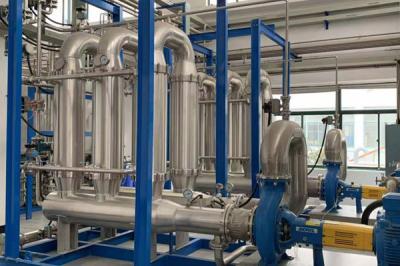
Ceramic membrane systems can serve as a physical separation step for removing fine suspended solids and colloidal particles.
Jiuwu Hi-Tech provides ceramic membrane technologies and engineering solutions for challenging brine purification applications, including industrial processes such as chlor-alkali brine treatment.
In suitable applications, cross-flow filtration allows brine to continuously flow along the membrane surface while fine particles are retained.
This operating mode helps reduce surface deposition and improve continuous operating stability.
The objective is to provide a more stable fine-filtration step before downstream polishing and membrane electrolysis, reducing particle loading entering downstream systems.
What Indicators Should Plant Operators Monitor?
When evaluating whether brine purification effectively supports stable electrolyzer operation, several indicators should be considered together:
Purified brine turbidity
Suspended solids concentration
Calcium and magnesium levels
Filtration system pressure difference
Membrane filtration flux (for membrane filtration systems)
Cleaning frequency
Electrolyzer voltage trend
Membrane performance trend
Unplanned maintenance frequency
These indicators should be evaluated together rather than relying on a single parameter.
Conclusion
Brine quality is one of the important upstream factors influencing ion-exchange membrane performance.
Good brine purification cannot eliminate all factors that contribute to membrane degradation. However, poor brine quality may increase contamination risks and affect the long-term stability of electrolyzer operation.
Therefore, chlor-alkali producers should consider brine purification as:
An important part of electrolyzer lifecycle management
rather than simply an independent filtration step.
For new plants, capacity expansions or brine purification upgrades, Jiuwu Hi-Tech can evaluate brine composition, plant capacity, existing treatment processes and downstream operating requirements to determine whether ceramic membrane fine filtration technology is suitable for the application.





 Call us on:
  Email Us:
  No. 9 Park Road, Pukou District, Nanjing City (Sanqiao Factory)